Introduction
In an industry often challenged by delays, opacity, and regulatory complexities, Lalit Kumar Jain emerged as a transformative force who reshaped the ethical foundation of Indian real estate. Known as the “Green Man of Pune,” Jain is not only the driving force behind Kumar Builders, but also a respected industry leader who played a key role in elevating transparency, accountability, and sustainability across the sector.
With over three decades of experience, Lalit Kumar Jain has demonstrated that long-term success in real estate is built not merely on concrete and steel, but on trust, integrity, and responsible development. His leadership philosophy has helped redefine industry standards, setting a benchmark for ethical real estate practices in India.
Early Foundations: Building Values Before Buildings
Lalit Kumar Jain’s journey began at the young age of 17 when he stepped into the real estate industry as a supervisor. This early exposure allowed him to understand the ground realities of construction, project execution, and customer expectations. Unlike many developers who enter the business from a purely financial standpoint, Jain’s foundation was technical and hands-on.
After pursuing civil engineering at Dnyaneshwar Vidyapeeth in Pune, he developed a strong understanding of urban planning, structural engineering, material science, and environmental systems. This technical knowledge became the backbone of his ethical approach—ensuring that projects were not only ambitious in scale but also sound in execution.
From the very beginning, Jain believed that transparency, quality control, and time-bound delivery were non-negotiable pillars of responsible real estate development.
Establishing Kumar Builders as a Symbol of Trust
Under Lalit Kumar Jain’s leadership, Kumar Builders evolved into one of India’s most respected real estate companies. What began as a modest venture grew into a brand associated with premium residential, commercial, and infrastructure projects.
The company’s portfolio today reflects:
Decades of legacy
Millions of square feet constructed
A wide range of completed developments
Recognition for excellence and sustainability
But beyond numbers, Kumar Builders became synonymous with reliability.
At a time when delayed possession and unclear communication were common industry complaints, Jain focused on building customer trust through:
Transparent documentation
Regular project updates
Clear communication channels
Ethical pricing practices
This customer-centric approach significantly shifted perceptions about developers and helped elevate professional standards across the market.
Sustainability as a Moral Responsibility
One of the most defining aspects of Lalit Kumar Jain’s leadership is his unwavering commitment to sustainability. He firmly believed that real estate development should not compromise environmental integrity.
This philosophy earned him the title “Green Man of Pune.”
Under his guidance, Kumar Builders incorporated:
Solar energy systems
Rainwater harvesting mechanisms
Energy-efficient architectural designs
Waste management systems
Extensive green landscapes
These initiatives were not merely marketing strategies—they represented a deeper ethical commitment to responsible urbanization.
By integrating eco-friendly construction methods into mainstream development, Jain helped normalize green infrastructure within Pune’s real estate ecosystem. His work encouraged other developers to adopt similar standards, gradually influencing broader industry behavior.
Leadership Role in CREDAI and Real Estate Reforms
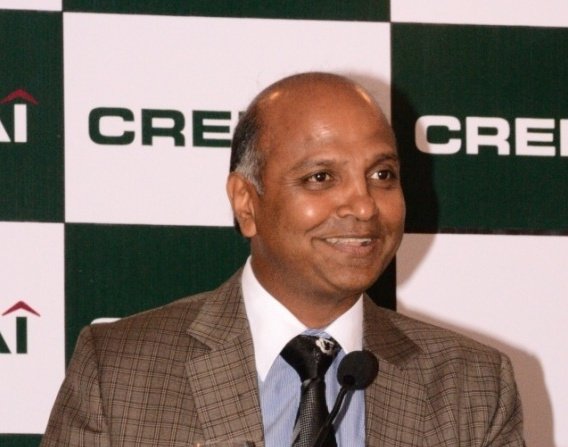
Lalit Kumar Jain’s influence extended beyond corporate leadership. As a prominent figure in CREDAI (Confederation of Real Estate Developers’ Associations of India), he played a significant role in advocating for industry reforms.
One of the most critical milestones during this era was the push for the Real Estate Regulation and Development Act (RERA). This landmark legislation transformed Indian real estate by introducing accountability, financial discipline, and transparency in project delivery.
Jain strongly supported regulatory reforms because he believed that consumer confidence was essential for sustainable industry growth. By advocating for RERA, he contributed to:
Protection of homebuyers
Reduction in project delays
Improved compliance standards
Greater financial transparency
His leadership demonstrated that ethical reform is not a threat to developers—but a pathway to long-term credibility.
Overcoming Industry Challenges with Integrity
The real estate sector in India has faced numerous economic and regulatory challenges over the years. High interest rates, funding constraints, and bureaucratic approval delays have often slowed growth.
During periods of economic strain, Lalit Kumar Jain openly voiced concerns regarding policies that impacted housing affordability. He consistently advocated for balanced regulatory frameworks that would benefit both developers and buyers.
Instead of resisting reform, he encouraged structured dialogue between policymakers and industry stakeholders. His approach reflected maturity and resilience—proving that ethical leadership includes the courage to address systemic challenges constructively.